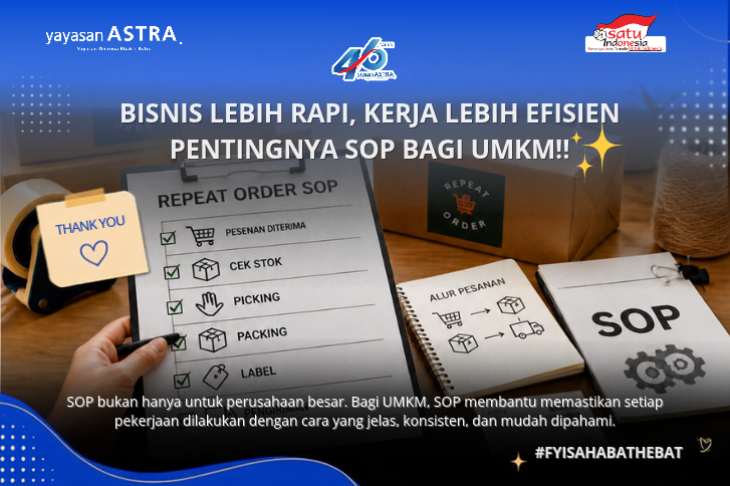
In running a business, MSMEs need to ensure that every task is executed systematically to maintain product and service quality. However, when processes from production to quality control and packaging lack clear workflows, the risk of errors increases, leading to inconsistent results. One effective way to overcome this challenge is by implementing Standard Operating Procedures (SOPs).
An SOP serves as a step-by-step guide that helps business owners and their teams understand how to complete their tasks properly. Implementation doesn't need to be overly complex or filled with technical jargon. MSMEs can start by identifying their most frequent processes—such as production—and mapping out every step from start to finish. Once the initial workflow is clear, SOP development can be expanded to other areas like quality assurance, packaging, or customer service.
To ensure seamless implementation, SOPs should be written in simple language and organized logically. This allows team members to perform their tasks effectively without relying constantly on a single individual. Moreover, SOPs help maintain consistent product and service quality, even when different people handle the tasks.
However, an SOP is not a "set-it-and-forget-it" document. MSME owners should evaluate their procedures regularly to identify bottlenecks or inefficiencies. Improvements can then be made gradually to suit the evolving needs of the business.
With clear and continuously refined SOPs, MSMEs can build more structured workflows, maintain quality, and boost operational efficiency. Start with one simple process, document the steps, and scale gradually as your business grows.